Coronavirus outbreak has officially become pandemic says WHO
Italy is to close all shops except food stores and pharmacies in Europe's toughest lockdown yet as virus deaths and cases continue to mount.
Prime Minister Giuseppe Conte said bars, restaurants, hairdressers and non-essential company departments would also close.
Meanwhile, President Donald Trump has suspended all travel from Europe to the United States for 30 days from Friday.
He said the EU had "failed to take the same precautions" as the US,
However, he said the United Kingdom would be exempt from the new travel ban.
Earlier the World Health Organization (WHO) said the outbreak was a pandemic.
WHO chief Dr Tedros said cases outside China had soared 13-fold in two weeks.
He said he was "deeply concerned" by "alarming levels of inaction".
A pandemic is defined as a disease that is spreading in multiple countries around the world at the same time.
What is Italy doing?
In a televised address, Mr Conte said any impact of the tightened restrictions - in force from Thursday until 25 March - on the rate of new cases would take a couple of weeks to be seen.
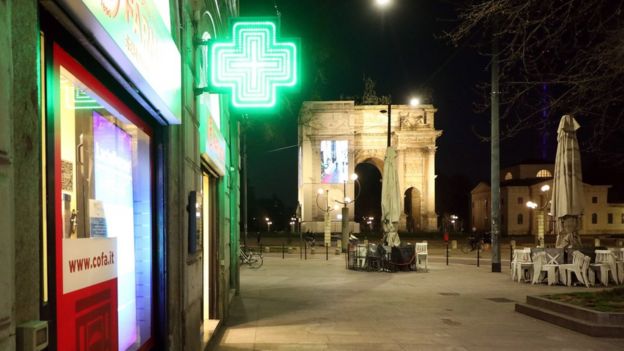
The country has already closed schools, gyms, museums, nightclubs and other venues across the country.
 EPA
EPA
It has more than 12,000 confirmed cases and a death toll of 827.
The confirmed cases include a player for Juventus football club, Daniele Rugani. The player was currently asymptomatic, the club said.
"Juventus Football Club is currently activating all the isolation procedures required by law, including the census of those who have had contact with him," a statement said.
 EPA
EPA
Nearly 900 people with the virus in Italy were in intensive care, the WHO's emergencies head Michael Ryan said.
"Iran [another outbreak hotspot] and Italy are suffering now but I guarantee you other countries will be in that situation very soon," he said.
What did the WHO say?
Dr Tedros said that calling the outbreak a pandemic did not mean the WHO was changing its advice about what countries should do.
He called on governments to change the course of the outbreak by taking "urgent and aggressive action".
"Several countries have demonstrated that this virus can be suppressed and controlled," he said.
"The challenge for many countries who are now dealing with large clusters or community transmission is not whether they can do the same - it's whether they will."
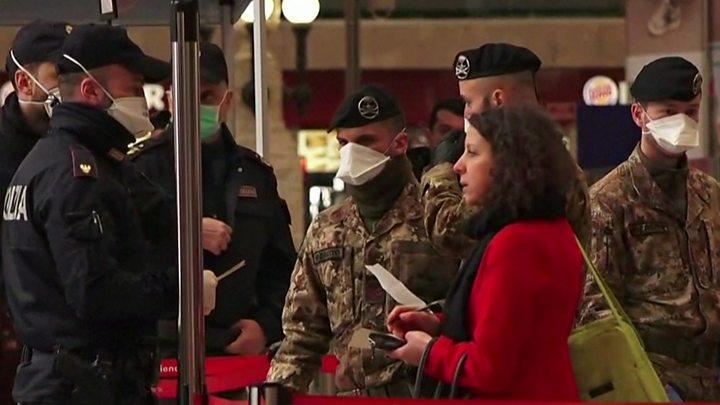
What life looks like under Italy's coronavirus lockdown
Governments had to "strike a fine balance between protecting health, minimising disruption and respecting human rights".
"We're in this together to do the right things with calm and protect the citizens of the world. It's doable," he said.
His appeal was followed by the several other countries announcing ever more stringent restrictions to try to prevent the virus taking a hold.
Denmark - which has 514 confirmed cases, up 10-fold since Monday, but no deaths so far - is to close all schools and universities from Friday and will send home all public sector employees who are not in critical roles in the coming days. The government also urged the cancellation of events with more than 100 people attending.
Meanwhile India has suspended most visas for foreigners until 15 April and Guatemala is banning European citizens from entering from Thursday.

Why is it being called a pandemic now?
By Philippa Roxby, BBC Health
The use of the p-word by the WHO to describe the global spread of this new coronavirus is not a huge surprise.
Up until now, it has talked merely of the "threat" or the "potential" for a pandemic. But with cases in more than 100 countries, and increasing numbers not linked to travel, the language has changed.
The WHO no longer "declares" a pandemic the way it used to, so this is as official as it gets. Yet this doesn't mean the pandemic cannot be controlled, it explains.
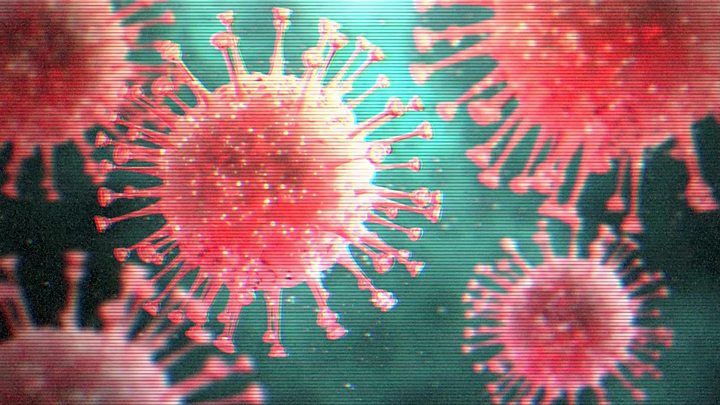
Epidemic v pandemic: What's the difference?
It's a call to action and a plea for all countries not to give up, no matter how large the number of cases.
Practically, countries are being told to continue to do what they have been advised to do. That means some may have to step up their response.
But the WHO is not changing what it's doing or the threat level of the virus.
What the use of the word "pandemic" highlights is the importance of countries around the world taking urgent action to respond to their own outbreaks - because now it's everyone's responsibility to turn the tide on the virus.

- FOLLOW LIVE UPDATES
- EASY STEPS: What can I do?
- QUARANTINE: Could the US do what Italy has done?
- A SIMPLE GUIDE: What are the symptoms?
- IMMUNITY: Are women and children less affected?
- MAPS AND CHARTS: Visual guide to the outbreak
- VIDEO: The 20-second hand wash

What is happening elsewhere?
Dr Ryan said the situation in Iran - where the official figures are 354 deaths among 9,000 cases - was "very serious". The WHO had sent 40,000 testing kits to Iran but there was still a shortage of ventilators and oxygen.
Earlier, Germany's Chancellor Angela Merkel warned that up to 70% of the country's population - some 58 million people - could contract the coronavirus. She said since there was no known cure, the focus would fall on slowing the spread of the virus. "It's about winning time," she said.
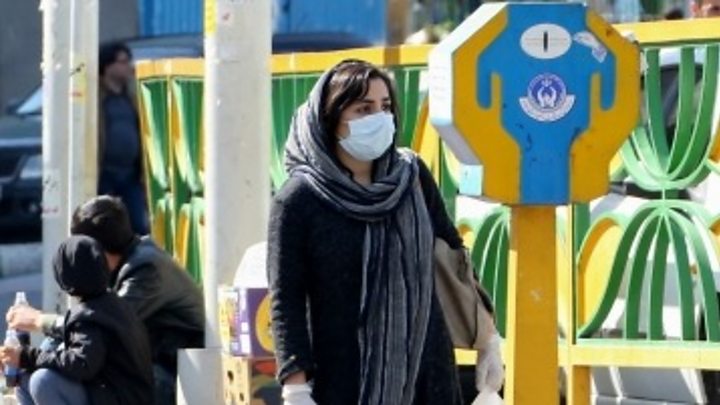
A video circulating in Iran shows a morgue in the city of Qom, full of dead bodies
Some German virologists dispute the high figure. Former federal government adviser on disease control, Prof Alexander Kekulé, told German media he saw a worst case scenario of 40,000 cases.
The number of confirmed cases in Germany has risen to 1,567 from 1,296, the Koch institute for infectious diseases said.
France said there had been 48 deaths in the country, an increase of 15 from Tuesday. There are 2,281 confirmed cases. Coronavirus-linked restrictions have been extended to two more areas, France's health minister said.
In other developments
- In the western US, Washington state is banning some large gatherings in certain areas and has told all school districts to prepare for possible closures in the coming days. The governor of Seattle's King County said he expected a serious coronavirus outbreak within weeks
- In the eastern US, New York's governor announced that troops would be sent into New Rochelle, in an attempt to contain an outbreak of the virus, as the total number of US cases passed 1,000 on Wednesday. A one-mile (1.6km) containment zone was in force around the town north of Manhattan. Some individuals have been quarantined
- Music festivals and other major events in the US, including Coachella festival in California, have been cancelled or postponed. The E3 gaming show set for Los Angeles in June is among those cancelled
- Thousands of flights have been cancelled worldwide as airlines struggle to cope with a slump in demand
- A UK health minister, Nadine Dorries, said she had tested positive for coronavirus and was self-isolating at home
- Several countries - including Sweden and Bulgaria, as well as the Republic of Ireland - have recorded their first deaths, while the number of confirmed cases in Qatar jumped from 24 to 262
- China - where the virus was first detected - has seen a total of 80,754 confirmed cases and 3,136 deaths. But it recorded its lowest number of new infections, just 19, on Tuesday
What are your experiences relating to the coronavirus outbreak? Share your experiences by emailing haveyoursay@bbc.co.uk.
Please include a contact number if you are willing to speak to a BBC journalist. You can also contact us in the following ways:
- WhatsApp: +44 7756 165803
- Tweet: @BBC_HaveYourSay
- Send pictures/video to yourpics@bbc.co.uk
- Upload your pictures / video here
- Please read our terms & conditions and privacy policy
Or use the form below